Despite the rapid adoption of advanced admixtures like Polycarboxylate Ether (PCE), Sodium Naphthalene Sulfonate Formaldehyde (SNF or PNS) continues to hold a strong position in the global construction industry. From large infrastructure developments to everyday ready-mix concrete, SNF remains one of the most widely used and trusted superplasticizers, particularly in price-sensitive and developing markets like Pakistan.
The reason is simple: SNF delivers consistent performance, strong water reduction, and predictable behavior at an economical cost. For many construction projects across Pakistan, especially highways, bridges, foundations, and mass concrete works, SNF offers the right balance between performance and affordability.
In this guide, we’ll explain what SNF is, how it works, its different grades, applications, limitations, and how it compares with PCE. We’ll also discuss its continued relevance in Pakistan’s construction sector and the role of dependable suppliers such as Tianjin Unilion Pakistan in ensuring consistent quality.
What Is Sodium Naphthalene Sulfonate Formaldehyde (SNF / PNS)?
Sodium Naphthalene Sulfonate Formaldehyde, commonly abbreviated as SNF or PNS, is a synthetic polymer-based high-range water-reducing admixture used in cementitious systems.
Chemical Composition and Manufacturing Process
SNF is manufactured through:
-
Sulfonation of naphthalene
-
Condensation with formaldehyde
-
Neutralization using sodium hydroxide
This process produces a polymer with strong anionic (negative) charges, which are responsible for dispersing cement particles efficiently.
SNF vs PNS – Is There a Difference?
-
SNF: Sodium Naphthalene Formaldehyde Sulfonate
-
PNS: Poly Naphthalene Sulfonate
In practice, both terms refer to the same type of superplasticizer and are used interchangeably in the construction and concrete admixture industry.
How SNF Works as a Concrete Admixture
Dispersion Mechanism in Cement Systems
SNF works through electrostatic repulsion. When added to concrete, SNF molecules adsorb onto cement particles and create strong negative charges on their surfaces. These like charges repel each other, preventing particle agglomeration.
Electrostatic Repulsion Explained Simply
Think of cement particles as magnets with the same ppoleswhen SNF is present, they push each other apart. This releases trapped water, improves flowability, and enhances workability without increasing water content.
Evolution of Superplasticizers: Where SNF Fits In
SNF belongs to the second generation of superplasticizers, positioned between traditional lignosulfonates and modern PCEs:
-
Lignosulfonates → Low water reduction, low cost
-
SNF / Melamine → High water reduction, good strength
-
PCE → Very high water reduction, excellent retention
SNF revolutionized concrete technology when it was introduced and remains highly relevant today, particularly in Pakistan’s infrastructure-driven construction market.
Uses of SNF in the Construction Industry
SNF in Ready-Mix Concrete
SNF is widely used in ready-mix concrete plants across Pakistan to:
-
Improve workability
-
Reduce the water-cement ratio
-
Increase compressive strength
It is especially common in residential, commercial, and mid-rise construction projects.
SNF in Precast Concrete
In precast applications, SNF helps achieve:
-
Faster early strength
-
Better mold filling
-
Improved surface finish
SNF in Mass Concrete and Infrastructure Projects
Major infrastructure projects such as roads, bridges, dams, and foundations often rely on SNF due to its cost efficiency, availability, and consistent performance, making it a preferred choice in Pakistan.
Role of SNF in Concrete Admixtures
Water Reduction and Workability Improvement
SNF typically provides 15–25% water reduction, significantly improving concrete strength without increasing cement consumption.
Effect on Strength Development and Setting Time
-
Improves early and final compressive strength
-
May cause slight retardation at higher dosages
-
Limited slump retention compared to PCE
Types of SNF: SNF-A, SNF-B, and SNF-C Explained
SNF is classified based on polymerization degree and sulfonation level.
SNF-A: High-Performance Grade
-
Maximum water reduction
-
Superior dispersion
-
Used in high-strength and precast concrete
SNF-B: Medium-Performance Grade
-
Balanced performance and cost
-
Ideal for general construction and ready-mix concrete
SNF-C: Economy Grade
-
Lower water reduction
-
Used where cost is the main concern
Best Type of SNF for Construction Applications
-
SNF-A → High-performance and precast concrete
-
SNF-B → General-purpose construction (most common in Pakistan)
-
SNF-C → Non-critical and low-budget projects
While SNF-A offers the highest performance, SNF-B provides the best value-to-performance ratio, making it widely used in Pakistan.
Dosage Guidelines for SNF in Concrete
Typical dosage:
-
0.6% to 1.2% by weight of cement
Dosage depends on:
-
Cement type
-
Desired slump
-
Temperature and weather conditions
⚠ Overdosing may cause segregation and excessive retardation.
Limitations and Common Issues with SNF
Despite its advantages, SNF has some limitations:
-
Rapid slump loss
-
Poor workability retention
-
Limited performance at very low water-cement ratios
-
Not suitable for self-compacting concrete
These drawbacks have driven the growing adoption of PCE-based admixtures.
Alternatives to SNF in the Construction Industry
Polycarboxylate Ether (PCE)
The most advanced alternative, offering superior performance.
Melamine-Based Superplasticizers
Provide high early strength but are expensive and less common.
Lignosulfonates
Used when cost is prioritized over performance.
Is PCE the Best Alternative to SNF?
Advantages of PCE over SNF
-
30–40% water reduction
-
Excellent slump retention
-
Lower dosage
-
Ideal for SCC and high-performance concrete
Limitations of PCE Compared to SNF
-
Higher cost
-
Sensitive to cement chemistry
-
Requires precise formulation
For advanced construction, PCE is superior, but SNF remains more economical for many projects in Pakistan.
How to Check the Quality of SNF
Visual and Physical Checks
-
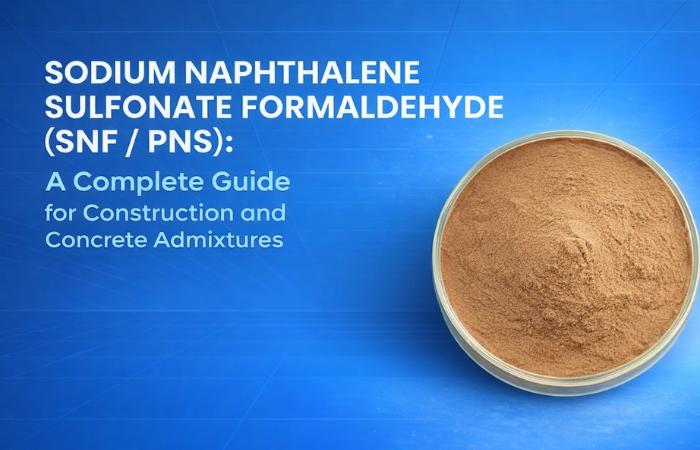
Free-flowing powder
-
Light to dark brown color
-
No hard lumps
-
High water solubility
Laboratory and Field Testing
-
Water reduction test
-
Slump test
-
Compressive strength test
-
Setting time evaluation
Reliable suppliers like Tianjin Unilion ensure consistent SNF quality that performs reliably across different cement systems.
SNF vs PCE: Comparison Table
| Parameter | SNF | PCE |
|---|---|---|
| Water Reduction | 15–25% | 30–40% |
| Slump Retention | Low | Excellent |
| Dosage | Higher | Lower |
| Cost | Lower | Higher |
| SCC Compatibility | Poor | Excellent |
Environmental and Sustainability Considerations
SNF is based on formaldehyde chemistry, making it less environmentally friendly than PCE. As Pakistan’s construction industry gradually shifts toward sustainable and low-VOC solutions, PCE adoption is increasing, especially for premium projects.
Future of SNF in Modern Concrete Technology
SNF will continue to be widely used in:
-
Infrastructure projects
-
General construction
-
Cost-driven applications
However, for high-performance, durable, and future-ready construction, PCE is clearly the long-term direction.
Conclusion
Sodium Naphthalene Sulfonate Formaldehyde (SNF / PNS) remains a dependable and cost-effective superplasticizer in the construction industry, particularly in Pakistan’s rapidly growing infrastructure and housing sector. While it cannot match the advanced performance of PCE, its affordability, availability, and predictable behavior ensure continued demand.
For manufacturers, contractors, and concrete producers, working with trusted suppliers such as Tianjin Unilion Pakistan ensures consistent quality and reliable results. Understanding both SNF and PCE allows smarter, project-specific decisions that balance performance and cost.